Confirmation Bias
Category: Probability & Belief
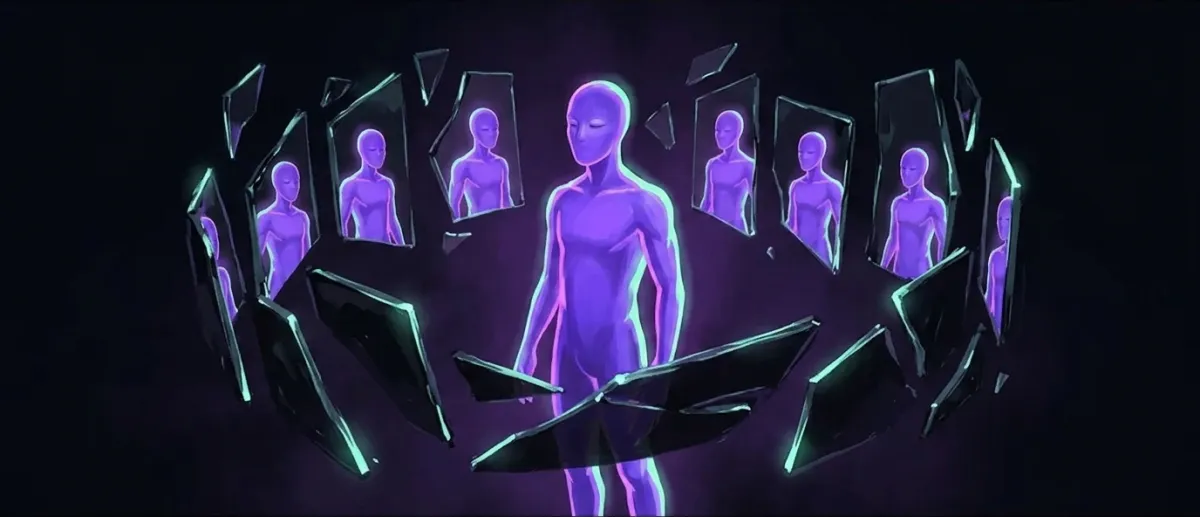
The tendency to search for, interpret, favor, and recall information in a way that confirms or supports one's prior beliefs or values.
How it works
Once you hold a belief, your mind stops acting like a neutral investigator and starts acting like a defense attorney for that belief. It shows up in three places at once: in search (you go looking for supporting evidence), in interpretation (ambiguous facts get read as confirmation), and in recall (you remember the hits and forget the misses). The belief shapes the very data you let in.
The driver is the discomfort of cognitive dissonance, contradiction feels bad, especially when a belief is tied to your identity or to a position you've stated publicly. Agreeing evidence is pleasant and effortless to process; disagreeing evidence is unpleasant and forces costly mental work, so we unconsciously route around it. We ask questions whose likely answers we already favor, and we hold contrary evidence to a far higher standard of proof than friendly evidence.
This makes confirmation bias uniquely dangerous, because it's self-reinforcing: the more you 'research' within a closed loop, the more certain you become, and certainty feels exactly like being right. It's the mechanism that turns echo chambers, conspiracy theories, and entrenched grudges into stable, evidence-resistant structures.
Where you'll see it
- Someone convinced a coworker dislikes them notices every curt email and ignored hallway nod, while filing the friendly moments under 'they were just being polite', and ends up certain of a hostility that was never there.
- A day-trader who 'knows' a stock is a winner reads only the bullish analyst notes, dismisses the bearish ones as 'fear-mongering,' and remembers their good calls while quietly forgetting the bad ones.
- A voter scrolls a feed algorithmically tuned to their views, sees the other side only at its worst, and concludes that everyone reasonable agrees with them, because every piece of evidence they encounter is pre-filtered to agree.
Where it comes from
The systematic study of confirmation bias is often credited to British psychologist Peter Wason, who in the 1960s designed the famous 2-4-6 task. He gave people a number triple that followed a hidden rule and asked them to discover the rule by proposing their own triples. Most generated only examples they expected to fit (like 8-10-12), receiving 'yes' after 'yes,' and confidently announced the wrong rule, because they never tried to falsify their hypothesis. Wason's work, alongside his Wason selection task, showed that people naturally seek confirmation rather than disconfirmation, and the broader bias was later synthesized in influential reviews by Raymond Nickerson.
How to counter it
Deliberately try to falsify, not confirm. Borrow the scientist's habit: ask 'what evidence would prove me wrong, and where would I find it?' Actively going hunting for the disconfirming case is the one move the bias can't survive.
Steelman the other side. Force yourself to state the strongest version of the opposing view well enough that someone who holds it would say 'yes, that's exactly right.' If you can't, you don't understand the issue yet, you only understand your side of it.
Diversify your inputs and track your record honestly. Follow thoughtful people you disagree with, and keep a log of your predictions so the misses can't quietly evaporate. When a belief is load-bearing, ask a trusted contrarian to poke holes, outside eyes see the evidence you've trained yourself not to.
The tell
You're doing it when you go looking for evidence that you're right instead of evidence that you're wrong.
Related biases
- Availability Heuristic
- Survivorship Bias
- Gambler's Fallacy
- Base Rate Fallacy
- Optimism Bias
- Ostrich Effect
Featured in
- 7 cognitive biases that quietly wreck investors
- How to Actually Beat Your Cognitive Biases (Awareness Isn't Enough)
- Cognitive Bias vs. Logical Fallacy: What's the Difference?
- Why Smart People Make Dumb Decisions
Common questions
What is Confirmation Bias?
Confirmation Bias is the tendency to search for, interpret, favor, and recall information in a way that confirms or supports one's prior beliefs or values. Instead of weighing evidence neutrally, the mind favors data that fits what it already believes. It distorts reasoning across three stages at once: how you search for information, how you interpret it, and how you remember it.
Why does Confirmation Bias happen?
Confirmation Bias happens because once you hold a belief, your mind stops acting like a neutral investigator and starts acting like a defense attorney for that belief. It operates in three places simultaneously: in search, where you go looking for supporting evidence; in interpretation, where ambiguous facts get read as confirmation; and in recall, where you remember the hits and forget the misses. This combined effect makes an existing belief feel steadily more justified over time.
What is an example of Confirmation Bias?
A common example of Confirmation Bias is someone convinced a coworker dislikes them who notices every curt email and ignored hallway nod, while filing the friendly moments under 'they were just being polite.' They end up certain of a hostility that was never there. The bias made supporting evidence salient and explained away the contradicting evidence.
How do you avoid Confirmation Bias?
You avoid Confirmation Bias by deliberately trying to falsify your belief rather than confirm it. Borrow the scientist's habit and ask 'what evidence would prove me wrong, and where would I find it?', then actively go hunting for that disconfirming case, since that is the one move the bias cannot survive. Steelmanning the opposing view also forces you to engage the strongest counterargument instead of the weakest.
How do you spot Confirmation Bias in yourself?
You spot Confirmation Bias in yourself when you catch yourself going looking for evidence that you're right instead of evidence that you're wrong. That directional search, hunting for support rather than testing for error, is the tell. The moment you notice it, switch to asking what would prove your belief false.
References
- Wason, P. C. (1960). On the failure to eliminate hypotheses in a conceptual task. Quarterly Journal of Experimental Psychology, 12(3), 129-140
- Wason, P. C. (1968). Reasoning about a rule. Quarterly Journal of Experimental Psychology, 20(3), 273-281
- Lord, C. G., Ross, L., & Lepper, M. R. (1979). Biased assimilation and attitude polarization: The effects of prior theories on subsequently considered evidence. Journal of Personality and Social Psychology, 37(11), 2098-2109
- Nickerson, R. S. (1998). Confirmation bias: A ubiquitous phenomenon in many guises. Review of General Psychology, 2(2), 175-220