Misinformation Effect
Category: Memory
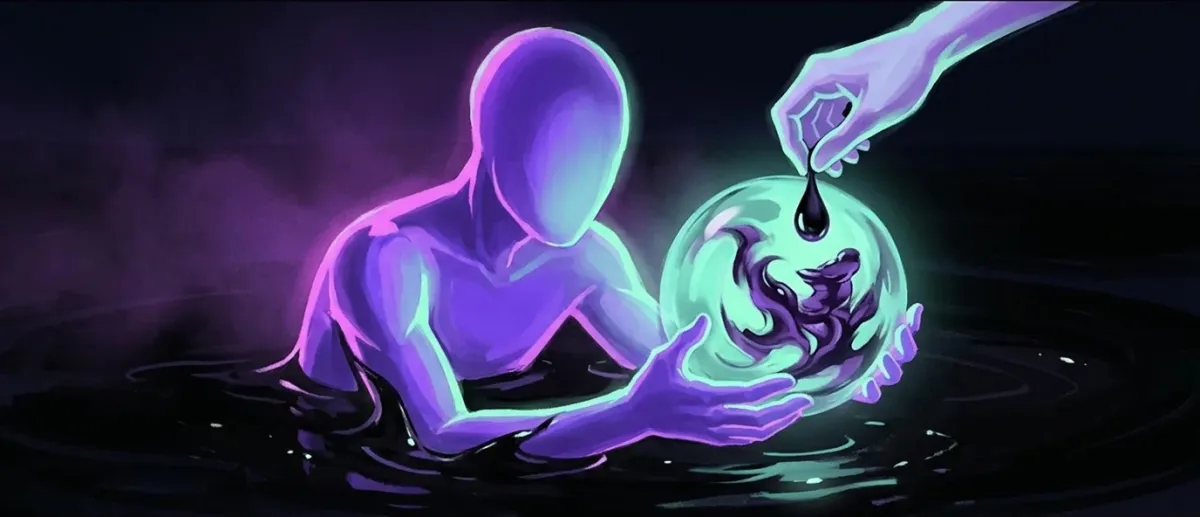
The impairment in memory for the past that arises after exposure to misleading information.
How it works
Memory feels like playback, but it's actually reconstruction. Every time you recall an event, your brain rebuilds it from fragments, and during that rebuild, any new information floating around can get woven into the original. The misinformation effect occurs when misleading details encountered after an event quietly contaminate your memory of the event itself. The new detail doesn't sit beside the old one; it can overwrite it.
The contamination is often invisible to the rememberer. You don't feel like you're guessing or being influenced, the altered memory feels exactly as vivid and certain as a true one. This is why confidence is a terrible guide to accuracy. The classic trigger is leading language: the way a question is phrased can plant a detail that wasn't there. Ask someone how fast cars were going when they 'smashed' versus 'hit' each other, and the 'smashed' group will not only estimate higher speeds but later 'remember' broken glass that never existed.
The effect is strongest when the misinformation is plausible, when it comes from a trusted or authoritative source, and when time has passed so the original memory has faded and become more malleable. It's a feature of how memory is designed to work, flexible and updatable, turned against accuracy.
Where you'll see it
- After a fender-bender, your passenger casually says 'that guy ran the red,' and a week later you're certain you saw the red light yourself, though you were looking at your phone.
- A jury hears a witness 'remember' a knife clearly, when the only mention of a knife came from the prosecutor's earlier question, not the witness's original statement.
- A family retells a vacation story so many times with one embellished detail that everyone, including the people who were there, now remembers the embellishment as fact.
Where it comes from
The misinformation effect is the signature finding of psychologist Elizabeth Loftus, beginning with experiments in the mid-1970s. In a famous 1974 study with John Palmer, participants watched a film of a car accident; those asked how fast the cars were going when they 'smashed into' each other gave higher speed estimates, and a week later were more likely to falsely recall broken glass, than those asked about cars that 'hit' each other. Loftus's decades of work reshaped how courts treat eyewitness testimony and demonstrated that memory is reconstructive and editable, not a fixed recording. Her later research even showed entirely false memories (like being lost in a mall as a child) could be implanted through suggestion.
How to counter it
Record before you discuss. The single most powerful defense is to capture your account of an important event, in writing, audio, or photos, before you talk it over with anyone or read others' versions. Once a memory has been jointly rehearsed, it's almost impossible to separate what you saw from what you were told.
Treat the source of every remembered detail as a question worth asking. When recalling something important, deliberately ask: did I actually witness this, or did someone tell me, or did I infer it? This 'source monitoring' habit won't make memory perfect, but it flags the details most likely to have been imported from elsewhere.
Be suspicious of your own certainty, especially for high-stakes recollections. In settings like accident reports, medical histories, or testimony, prefer contemporaneous documentation over vivid memory every time, and avoid leading questions when interviewing others, ask 'what did you see?' not 'did you see the X?' The phrasing of the question is often the contamination.
The tell
You're doing it when a detail you 'clearly remember' turns out to have been planted by someone else's question or retelling.
Related biases
- Hindsight Bias
- Peak-End Rule
- Google Effect (Digital Amnesia)
- Zeigarnik Effect
- Recency Bias
- Primacy Effect
Featured in
- How Rational Are You, Really? (take the 5-minute bias test)
- How to Overcome Cognitive Bias: 7 debiasing tactics that actually work
- The Complete List of 58 Cognitive Biases (with real examples)
Common questions
What is Misinformation Effect?
The Misinformation Effect is the impairment in memory for a past event that arises after exposure to misleading information. When people encounter inaccurate details after an event, those details can quietly contaminate their memory of what actually happened. As a result, they may confidently recall things that were never part of the original experience.
Why does Misinformation Effect happen?
The Misinformation Effect happens because memory is reconstruction, not playback. Every time you recall an event, your brain rebuilds it from fragments, and during that rebuild any new information floating around can get woven into the original. Misleading details encountered after an event therefore contaminate your memory of the event itself.
What is an example of Misinformation Effect?
A classic example of the Misinformation Effect is a fender-bender where your passenger casually says 'that guy ran the red,' and a week later you are certain you saw the red light yourself, even though you were actually looking at your phone. The comment you heard afterward became part of your memory of the event. You now 'remember' seeing something you never witnessed.
How do you avoid Misinformation Effect?
The most powerful way to avoid the Misinformation Effect is to record before you discuss. Capture your account of an important event in writing, audio, or photos before you talk it over with anyone or read others' versions. Once a memory has been jointly rehearsed, it is almost impossible to separate your original recollection from information added later.
What is the difference between Misinformation Effect and Hindsight Bias?
The Misinformation Effect is a distortion of memory in which misleading information encountered after an event contaminates your recollection of what happened. Hindsight Bias, by contrast, is the tendency to believe after an outcome is known that you predicted or expected it all along. The Misinformation Effect corrupts what you remember perceiving, while Hindsight Bias corrupts what you believe you knew or expected beforehand.
References
- Elizabeth F. Loftus, John C. Palmer (1974). Reconstruction of automobile destruction: An example of the interaction between language and memory. Journal of Verbal Learning and Verbal Behavior, 13(5), 585-589
- Elizabeth F. Loftus, David G. Miller, Helen J. Burns (1978). Semantic integration of verbal information into a visual memory. Journal of Experimental Psychology: Human Learning and Memory, 4(1), 19-31
- Elizabeth F. Loftus, Hunter G. Hoffman (1989). Misinformation and memory: The creation of new memories. Journal of Experimental Psychology: General, 118(1), 100-104
- Hartmut Blank, Céline Launay (2014). How to protect eyewitness memory against the misinformation effect: A meta-analysis of post-warning studies. Journal of Applied Research in Memory and Cognition, 3(2), 77-88
- Elizabeth F. Loftus (2005). Planting misinformation in the human mind: A 30-year investigation of the malleability of memory. Learning & Memory, 12(4), 361-366