Moral Licensing
Category: Social
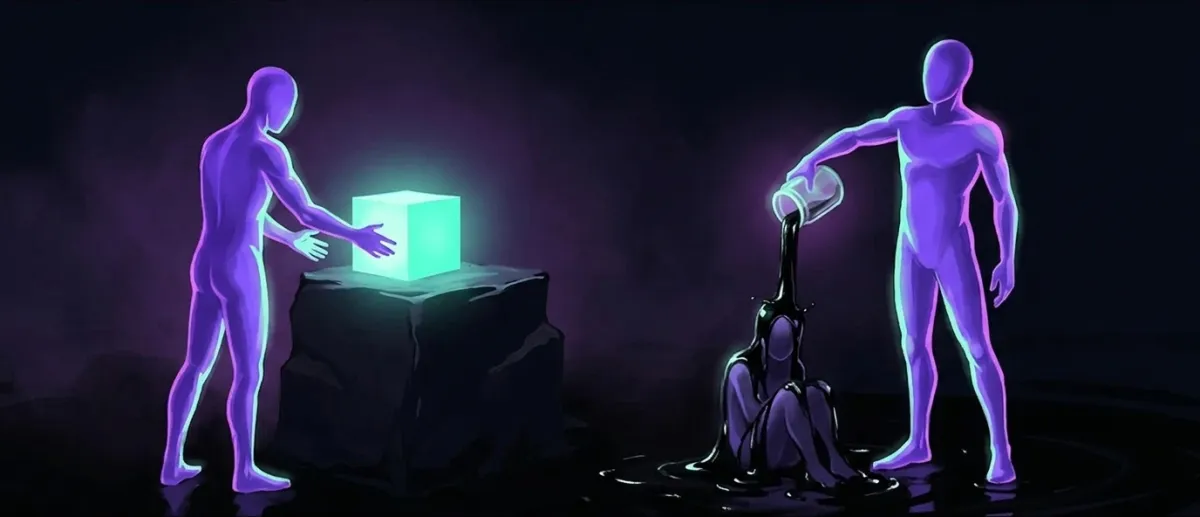
Doing one good thing gives you psychological permission to do a bad thing right after, because your "good person" account feels topped up.
How it works
You track your morality like a bank balance instead of judging each act on its own. When you deposit a good deed, or even just prove to yourself you are not a bigot, the balance goes up and the next slightly-shady move feels prepaid. Researchers describe two flavors: moral credentials, where the past good act reframes the ambiguous next act so it no longer looks bad ("I already proved I am not sexist, so this can't be sexism"), and moral credits, where you feel you have earned the right to indulge even knowing it is wrong. The kicker is that the license does not have to be real: merely imagining a future good deed, or recalling an old one, can unlock the same permission, which means no actual good was done at all.
Where you'll see it
- Monin and Miller (2001), the founding study: across three experiments, people who first disagreed with blatantly sexist or racist statements then felt licensed to favor a White or male candidate for a job. Establishing you are not prejudiced made you more comfortable acting prejudiced.
- Sachdeva, Iliev, and Medin (2009): participants who copied a story describing themselves with positive words (caring, generous) later donated about one fifth as much to charity as those who copied negative words about themselves. Feeling saintly made them stingy; feeling like a sinner made them compensate.
- Mazar and Zhong (2010), 'Do Green Products Make Us Better People?': after buying from a green online store rather than a conventional one, people cheated and stole more money in a follow-up dot-counting task. The eco-purchase bought them a license to lie. (Note: later replications by Urban, Bahnik, and Braun Kohlova, 2019, failed to reproduce this specific green-consumption effect, so treat it as illustrative, not settled.)
- Everyday version: you hit the gym, so you order dessert; you donate to one cause, so you ghost the next fundraiser; a company touts its diversity hire, then greenlights a discriminatory policy feeling inoculated against the charge.
Where it comes from
The effect was named and demonstrated by Benoit Monin and Dale Miller in their 2001 Journal of Personality and Social Psychology paper "Moral Credentials and the Expression of Prejudice." They coined "moral credential" to explain why proving your virtue in one moment frees you to act against it in the next. The idea was extended by Sonya Sachdeva, Rumen Iliev, and Douglas Medin (2009), who framed it as "moral self-regulation," people balancing a running self-image around a set point (their memorable title: "Sinning Saints and Saintly Sinners"). The most honest number comes from Irene Blanken, Niels van de Ven, and Marcel Zeelenberg (2015), whose meta-analysis of 91 studies and 7,397 participants pegged the effect at a modest d of about 0.31, notably smaller than the flashy early papers, with published studies running larger than unpublished ones (a publication-bias fingerprint).
How to counter it
Kill the accountant. Stop treating morality as a running balance you can pay down. When you catch yourself mentally crediting today's good deed, force the question with the deed struck out: "Is what I am about to do right?" The earlier act is not currency and it does not buy anything.
Bust the fake license first. Planning to donate later, or replaying an old kindness, hands you the exact same permission as a real good deed while zero good gets done. If the "credit" you are about to spend is an intention or a memory rather than something happening right now, it is counterfeit, so refuse to cash it.
Listen for the payment phrase. "I've earned this," "I already did my part," "come on, after everything I did today" are all receipts for a bad act you are trying to justify. The instant a past good deed shows up as payment for a present shady move, name it out loud as the license activating and veto the move.
Be a standard, not a trophy winner. "I did a good thing" is a trophy that gets spent; "I am someone who does the right thing every time" is a bar you have to clear on this exact choice. Define yourself by the rule you hold, not the deeds you have banked, so there is never a balance to draw down.
The tell
You hear yourself say "I've earned this," "I already did my part," or "come on, after everything I did today." Any sentence where a past good deed is offered as payment for a present bad one is the license being cashed.
Related biases
- Dunning-Kruger Effect
- Halo Effect
- Bandwagon Effect
- Fundamental Attribution Error
- Authority Bias
- Groupthink
Common questions
What is Moral Licensing?
Moral Licensing is a cognitive bias in which doing one good thing gives you psychological permission to do a bad thing right afterward, because your "good person" account feels topped up. You track your morality like a running bank balance instead of judging each act on its own merits, so a fresh good deed makes the next slightly-shady move feel prepaid.
Why does Moral Licensing happen?
Moral Licensing happens because people track their morality like a bank balance rather than judging each act independently. Depositing a good deed, or even just proving to yourself that you are not a bigot, raises the perceived balance, so the next questionable act feels already paid for. Researchers describe two flavors, including moral credentials, where a past good act reframes an ambiguous next act so it no longer looks wrong.
What is an example of Moral Licensing?
The founding study of Moral Licensing is Monin and Miller (2001). Across three experiments, people who first disagreed with blatantly sexist or racist statements then felt licensed to favor a White or male candidate for a job. Establishing that they were not prejudiced gave them permission to make the discriminatory choice.
How do you avoid Moral Licensing?
To avoid Moral Licensing, kill the accountant: stop treating morality as a running balance you can pay down. When you catch yourself mentally crediting today's good deed, force the question with the deed struck out, "Is what I am about to do right?" The earlier act is not currency and it does not buy anything.
What is the difference between Moral Licensing and the Halo Effect?
Moral Licensing is when your own past good deed gives you permission to act badly next, treating morality as a spendable balance. The Halo Effect is different: it is when one positive trait in a person leads you to assume their other unrelated traits are also positive. Moral Licensing is about self-permission for your future behavior, while the Halo Effect is about biased judgment of someone's overall character.
References
- Benoit Monin, Dale T. Miller (2001). Moral Credentials and the Expression of Prejudice. Journal of Personality and Social Psychology, 81(1), 33-43
- Sonya Sachdeva, Rumen Iliev, Douglas L. Medin (2009). Sinning Saints and Saintly Sinners: The Paradox of Moral Self-Regulation. Psychological Science, 20(4), 523-528
- Nina Mazar, Chen-Bo Zhong (2010). Do Green Products Make Us Better People?. Psychological Science, 21(4), 494-498
- Irene Blanken, Niels van de Ven, Marcel Zeelenberg (2015). A Meta-Analytic Review of Moral Licensing. Personality and Social Psychology Bulletin, 41(4), 540-558
- Daniel A. Effron, Benoit Monin (2010). Letting People Off the Hook: When Do Good Deeds Excuse Transgressions?. Personality and Social Psychology Bulletin, 36(12), 1618-1634