Reactance
Category: Social
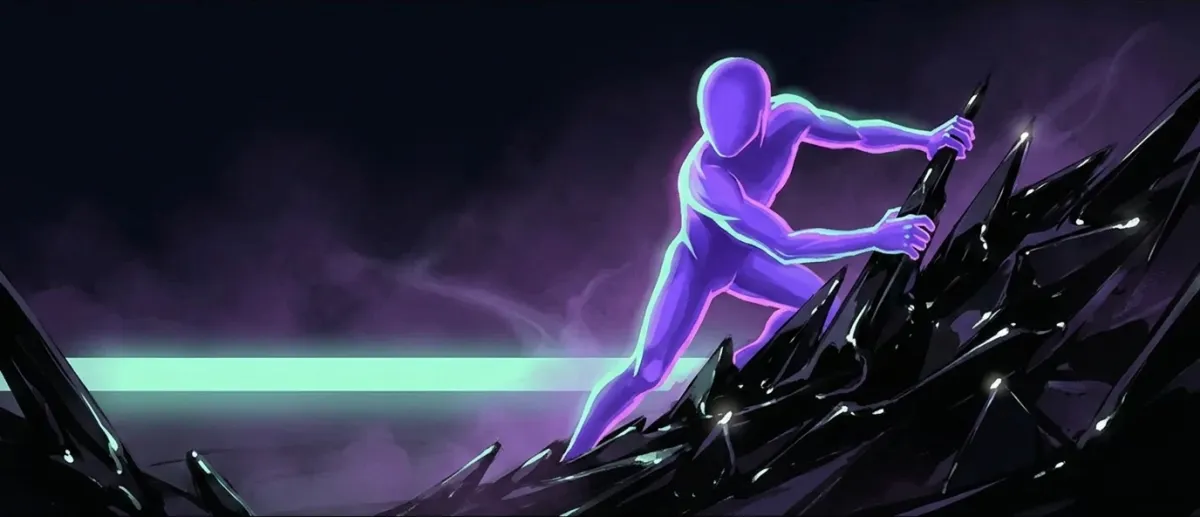
Reactance is the urge to do the opposite of what you are told, because a rule or push feels like a threat to your freedom.
How it works
You carry a private list of behaviors you believe are yours to choose. When someone threatens or removes one of those freedoms, whether by a rule, a hard sell, or a smug "you have to," you feel a spike of anger plus a stream of counterarguments, and Dillard and Shen showed these two are so intertwined they are basically one reaction. That arousal is aversive, and the cheapest way to kill it is to reassert the freedom, which usually means doing the very thing you were pushed away from, or wanting it more. Reactance scales with how important the freedom is, how total the threat is, and how illegitimate the source feels, so a heavy-handed order from someone with no standing detonates it fastest. The nasty twist is that it is not really about the object at all: the toy, the policy, the product only becomes attractive because it got fenced off, which is why persuasion that pushes too hard produces the exact opposite of what it wanted (the "boomerang effect").
Where you'll see it
- **Streisand effect (2003):** Barbra Streisand sued to remove a single aerial photo of her Malibu home from an obscure coastal-erosion archive. Before the suit, the photo had been downloaded 6 times (two by her lawyers). After the lawsuit made news, more than 420,000 people went to look. Trying to suppress it is what made it worth seeing.
- **Reverse psychology on toddlers:** In Sharon Brehm and Marsha Weinraub's 1977 study, two-year-old boys blocked from a toy by a tall barrier consistently went for the blocked toy over an identical one sitting in the open. The barrier, not the toy, created the desire. Parents rediscover this every time "don't touch the outlet" turns the outlet into the most interesting object in the house.
- **Anti-smoking and anti-drug campaigns that backfire:** High-threat, controlling messages ("You MUST quit") reliably produce boomerang effects, where the targeted teens report stronger intentions to smoke or use. The National Youth Anti-Drug Media Campaign is the classic case: more exposure to the ads predicted more pro-drug belief. The finger-wagging tone reads as a freedom grab, so the audience defends the behavior to defend their autonomy.
- **Warning labels and "banned" content:** Parental Advisory stickers, region blocks, and "this book was banned" tables all function as attractiveness boosters. Telling people they cannot have something is one of the most reliable ways to make them want it, which marketers exploit with "members only" and "not available in your country."
Where it comes from
Jack W. Brehm conceived and published the theory at Duke University in his 1966 book "A Theory of Psychological Reactance" (New York: Academic Press), which argued that a threat to a free behavior produces a motivational state ("reactance") aimed at restoring that freedom. (Brehm did not join the University of Kansas until 1975.) Brehm and Brehm's 1981 follow-up added moderators such as the legitimacy of the threat. Early work measured reactance only through its outcomes (boomerang effects); Dillard and Shen (2005) later established that reactance is best modeled as an intertwined blend of anger and negative cognitions, giving researchers a way to measure the state directly.
How to counter it
Hand the choice back before you ask. The single best-tested antidote is restoring autonomy: adding "but it's your call" or "you're free to say no" to a request measurably reduces reactance and increases compliance, because there is no freedom to defend if you just gave it to them. Watch for the anger-plus-counterargue spike in yourself. The moment you feel irritated at being told what to do AND you are inventing reasons the advice is wrong, that is reactance, not judgment. Pause and ask: would I still reject this if a friend had mentioned it casually instead of ordering me? Make the resisted thing effortful, not forbidden. If you actually want less of a behavior, quietly raise the friction instead of banning it loudly. Bans advertise. Friction just works.
The tell
You catch yourself the instant "I was going to do that anyway, but now that you TOLD me to, I won't" runs through your head. If your reason for refusing is the tone of the request rather than the content, you are protecting your ego, not making a decision.
Related biases
- Dunning-Kruger Effect
- Halo Effect
- Bandwagon Effect
- Fundamental Attribution Error
- Authority Bias
- Groupthink
Common questions
What is Reactance?
Reactance is the urge to do the opposite of what you are told, because a rule, order, or push feels like a threat to your freedom. When a behavior you consider yours to choose is restricted, Reactance drives you to defend that freedom, often by resisting or doing the forbidden thing.
Why does Reactance happen?
Reactance happens because you carry a private list of behaviors you believe are yours to choose, and when someone threatens or removes one of those freedoms through a rule, a hard sell, or a smug "you have to," you feel a spike of anger paired with a stream of counterarguments. Dillard and Shen showed these two are so intertwined they are essentially one reaction, and that arousal is aversive, motivating you to push back and restore control.
What is an example of Reactance?
A classic example of Reactance is the Streisand effect (2003), when Barbra Streisand sued to remove a single aerial photo of her Malibu home from an obscure coastal-erosion archive. Before the suit the photo had been downloaded only 6 times, two of those by her own lawyers, but the attempt to suppress it triggered mass interest and far wider spread, showing how restricting access can provoke the opposite of what was intended.
How do you avoid Reactance?
You avoid Reactance by handing the choice back before you ask. The single best-tested antidote is restoring autonomy, such as adding "but it's your call" or "you're free to say no" to a request, which measurably reduces Reactance and increases compliance, because there is no freedom left to defend once you have already given it to them.
How do you spot Reactance in yourself?
You spot Reactance in yourself the instant the thought "I was going to do that anyway, but now that you TOLD me to, I won't" runs through your head. If your reason for refusing is the tone of the request rather than its content, you are protecting your sense of freedom rather than making a real decision, which is the tell of Reactance.
References
- Brehm, J. W. (1966). A Theory of Psychological Reactance. New York: Academic Press
- Brehm, S. S., & Weinraub, M. (1977). Physical barriers and psychological reactance: 2-yr-olds' responses to threats to freedom. Journal of Personality and Social Psychology, 35(11), 830-836
- Dillard, J. P., & Shen, L. (2005). On the nature of reactance and its role in persuasive health communication. Communication Monographs, 72(2), 144-168
- Steindl, C., Jonas, E., Sittenthaler, S., Traut-Mattausch, E., & Greenberg, J. (2015). Understanding psychological reactance: New developments and findings. Zeitschrift fuer Psychologie, 223(4), 205-214
- Rosenberg, B. D., & Siegel, J. T. (2018). A 50-year review of psychological reactance theory: Do not read this article. Motivation Science, 4(4), 281-300