Cryptomnesia
Category: Memory
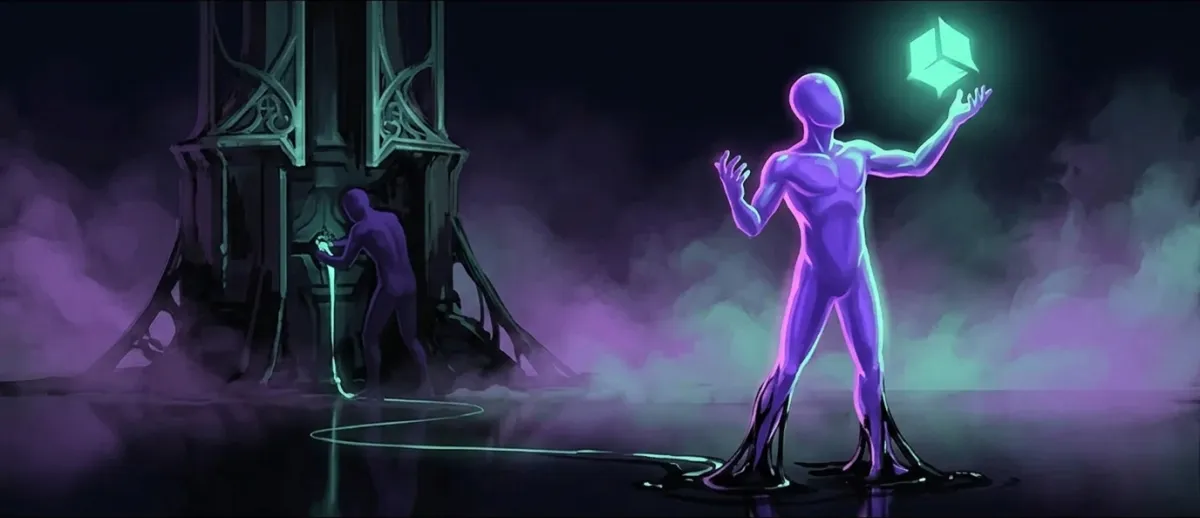
Occurs when a forgotten memory returns without it being recognized as such by the subject, who believes it is something new and original.
How it works
Memory stores two separate things about any idea: its content (the melody, the phrase, the concept) and its source (where you got it). These can be remembered independently, and crucially, the source is the more fragile of the two. Cryptomnesia is what happens when the content survives but the source is lost: a forgotten memory resurfaces feeling brand new, and you experience it as your own original creation. It's not lying or even ordinary forgetting; it's a source-monitoring failure.
The danger is that the idea arrives stripped of its origin tag, so there's no internal flag warning you that it came from somewhere else. It feels like inspiration. Your brain hands you the melody, the joke, or the solution with all the subjective markers of novelty, the little spark of 'I just thought of this!', precisely because the part of memory that would say 'you heard this on the radio in 2019' has gone dark.
Cryptomnesia is most likely when there's a gap between exposure and recall (so the source fades while the content lingers), when you were only half-attending when you first encountered the idea, and when the domains are similar enough that the borrowed idea fits naturally into your own work. It's why creative people, who absorb enormous amounts of others' material, are especially vulnerable to unintentionally reproducing it.
Where you'll see it
- A songwriter pens a hook they're sure is original, only for a lawsuit to reveal it closely echoes a hit they'd heard years before, the famous George Harrison 'My Sweet Lord' case being the archetype.
- In a brainstorm, you proudly 'invent' a solution that a colleague actually proposed in a meeting last month, which you'd forgotten attending.
- A novelist writes a striking metaphor that turns out to be nearly verbatim from a book they read in college and consciously forgot.
Where it comes from
The term cryptomnesia ('hidden memory') dates to the late 19th century and was used by figures including psychologist Théodore Flournoy, who in 1900 described a medium's 'channeled' material as reconstituted forgotten memories. The phenomenon was brought into rigorous experimental psychology largely by Alan Brown and Dana Murphy in 1989, who showed in controlled studies that people in idea-generating tasks would unwittingly reproduce others' contributions and claim them as their own, and identified the conditions (elapsed time, source confusion) that made it more likely. It connects to broader source-monitoring research by Marcia Johnson and colleagues, who mapped how we attribute memories to their origins and how that process fails.
How to counter it
Tag your sources as you go. Cryptomnesia thrives on missing origin information, so the defense is to capture where ideas come from at the moment you encounter them, notes, reading logs, attribution in your brainstorm documents. The harder it is to lose the source, the harder it is to misremember an idea as your own.
For any creative or original work, build in a deliberate prior-art check before you claim novelty. Search for the melody, the phrase, the concept; show drafts to people likely to recognize a borrowed source. This isn't an insult to your originality, it's standard practice precisely because even honest, talented people unconsciously reabsorb what they've consumed.
In group settings, keep written records of who contributed what, since cryptomnesia often turns a colleague's idea into your own a few weeks later. And cultivate humility about the feeling of inspiration itself: the spark of 'this is brand new' is exactly the sensation cryptomnesia produces, so treat especially polished, fully-formed ideas with a little extra suspicion about their true origin.
The tell
You're doing it when an idea feels thrillingly original and you have no memory of where it came from, because the source is exactly what your brain deleted.
Related biases
- Hindsight Bias
- Peak-End Rule
- Google Effect (Digital Amnesia)
- Misinformation Effect
- Zeigarnik Effect
- Recency Bias
Featured in
- How Rational Are You, Really? (take the 5-minute bias test)
- The Complete List of 58 Cognitive Biases (with real examples)
Common questions
What is Cryptomnesia?
Cryptomnesia is a memory bias that occurs when a forgotten memory returns without being recognized as a memory, so the person believes it is something new and original. The content of an idea survives in memory while its source is lost, making borrowed material feel freshly invented. It is sometimes described as inadvertent plagiarism because the borrowing is unconscious.
Why does Cryptomnesia happen?
Cryptomnesia happens because memory stores two separate things about any idea: its content (the melody, phrase, or concept) and its source (where you got it). These are remembered independently, and the source is the more fragile of the two. When the content survives but the source is lost, a forgotten memory resurfaces feeling brand new and original.
What is an example of Cryptomnesia?
A classic example of Cryptomnesia is a songwriter who pens a hook they are certain is original, only for a lawsuit to reveal it closely echoes a hit they had heard years before. The archetypal case is George Harrison's 'My Sweet Lord,' which was found to closely resemble an earlier song he had encountered. The melody's content survived in his memory while its source was forgotten.
How do you avoid Cryptomnesia?
You avoid Cryptomnesia by tagging your sources as you go, since the bias thrives on missing origin information. Capture where ideas come from at the moment you encounter them using notes, reading logs, and attribution in your brainstorm documents. The harder it is to lose the source, the harder it is for Cryptomnesia to take hold.
How do you spot Cryptomnesia in yourself?
You spot Cryptomnesia in yourself when an idea feels thrillingly original yet you have no memory of where it came from, because the source is exactly what your brain deleted. That combination of strong originality feeling plus a blank on origin is the tell. When it appears, treat the idea as possibly borrowed and try to trace where you might have encountered it before.
References
- Alan S. Brown; Dana R. Murphy (1989). Cryptomnesia: Delineating inadvertent plagiarism. Journal of Experimental Psychology: Learning, Memory, and Cognition, 15(3), 432-442
- Richard L. Marsh; Gordon H. Bower (1993). Eliciting cryptomnesia: Unconscious plagiarism in a puzzle task. Journal of Experimental Psychology: Learning, Memory, and Cognition, 19(3), 673-688
- Richard L. Marsh; Joshua D. Landau; Jason L. Hicks (1997). Contributions of inadequate source monitoring to unconscious plagiarism during idea generation. Journal of Experimental Psychology: Learning, Memory, and Cognition, 23(4), 886-897
- Aki Tanigami (2018). A review of cryptomnesia research. The Japanese Journal of Psychology, 89(2), 186-202