Modality Effect
Category: Memory
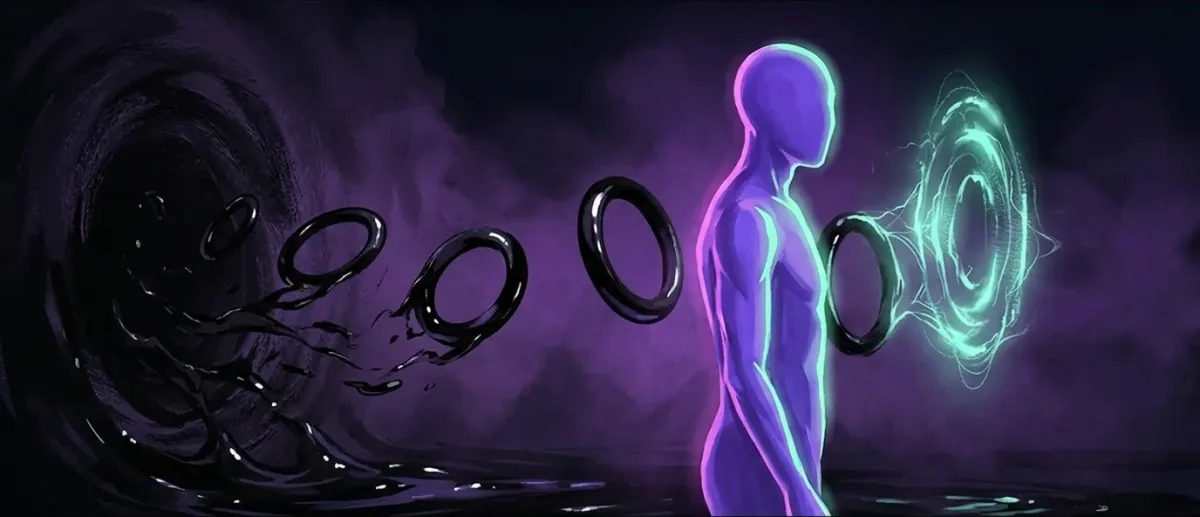
Your memory for the last item or two in a list is noticeably better when you heard the list than when you read it. Sound sticks around in your head a beat longer than print, and that leftover echo props up the tail end of what you just took in.
How it works
When you hear a sequence, the sound leaves a raw sensory trace that lingers for roughly two seconds after the words stop. That trace is precategorical, meaning it holds the physical sound before your brain has fully labeled it, and it gives the final items a second pass that read-in items never get. So auditory and visual lists tie for the early and middle positions, but the auditory version pulls ahead sharply at the recency end, the last one or two items. The effect is fragile: play any extra irrelevant sound right after the list (a spoken "recall" or "go") and the echo gets overwritten, wiping out the auditory advantage. That last detail, the suffix effect, is the fingerprint that told researchers a real sensory store was doing the work.
Where you'll see it
- A waiter takes your table's order by ear and remembers the last two dishes perfectly, then loses them the one night the kitchen buzzer goes off right as the table finishes talking. That buzzer is a suffix, and it just erased the echo.
- You call a company, hear the callback number spoken at the end, and the last few digits are crisp. The confirmation screen shows the same number in text and the tail feels mushier, so you read it twice.
- In a meeting, the action item said out loud at the very end of the call sticks with you better than the identical line sitting at the bottom of the emailed agenda. Neither is safe an hour later, but in the moment the spoken one wins the recency slot.
- A pharmacist reads dosing instructions aloud and the final step ("take with food") lands, but reading the same label off the bottle, that last line competes with everything above it and slips.
Where it comes from
R. Conrad and A. J. Hull nailed it down in 1968 in Psychonomic Science, showing that lists of letters and digits produced a much bigger recency bump when presented by ear than by eye, with visual lists showing almost no recency at all. A year later Robert Crowder and John Morton explained why with their Precategorical Acoustic Storage (PAS) model in Perception and Psychophysics (1969), proposing a brief auditory store of about two seconds that props up the last items and can be knocked out by a redundant sound tacked on the end (the suffix effect). Catherine Penney reframed the whole area in 1989 in Memory and Cognition with her "separate streams" model, arguing auditory and visual verbal input are processed by systems with different properties rather than one store with a decaying tail. Note the naming trap: there is a different, unrelated "modality effect" in multimedia learning (Mousavi, Low, and Sweller, 1995) about splitting instruction across eye and ear. The memory bias described here is the older, narrower one about auditory recency.
How to counter it
Convert anything important out of the echo and into text. The auditory recency advantage is real but lasts about two seconds. Numbers, addresses, dosages, and deadlines said aloud should be written down or typed immediately, because the crisp feeling of "I've got it" is your sensory trace, not durable memory.
Say it back before the sound decays. Reading the last items back out loud re-enters them through the auditory channel and forces categorization, which survives long after the raw echo is gone. This is why good nurses and pilots use read-back confirmation instead of trusting that they heard the last digit.
Watch for suffixes that wipe the tail. Any irrelevant sound right after a spoken list (a chime, a "thanks, bye," background chatter) overwrites the echo and quietly deletes the recency advantage. When someone gives you critical info by ear, get it before the next noise hits, or ask them to repeat the final items.
Do not assume heard equals read for the middle of a list. The modality advantage lives almost entirely at the last one or two items. If a spoken instruction has five steps, the middle three get no auditory boost at all, so treat the whole thing as if you heard nothing and capture it in full.
The tell
You feel confident about the last thing someone just said out loud, more confident than about the identical thing in an email, and that confidence collapses if a noise or interruption lands right after they finish talking. If a single beep or a "bye" makes the end of a spoken list evaporate, you were leaning on the echo, not the memory.
Related biases
- Hindsight Bias
- Peak-End Rule
- Google Effect (Digital Amnesia)
- Misinformation Effect
- Zeigarnik Effect
- Recency Bias
Common questions
What is Modality Effect?
The Modality Effect is a memory bias in which you recall the last item or two of a list noticeably better when you heard it spoken than when you read it. Sound lingers in the mind a beat longer than print, and that leftover echo props up the tail end of what you just took in. The early and middle items are remembered about equally whether heard or read.
Why does Modality Effect happen?
The Modality Effect happens because hearing a sequence leaves a raw sensory trace that lingers for roughly two seconds after the words stop. This trace is precategorical, meaning it holds the physical sound before the brain has fully labeled it, and it gives the final spoken items a second pass that read-in items never get. That extra echo is why auditory recall of the last items beats visual recall.
What is an example of Modality Effect?
A clear example of the Modality Effect is a waiter who takes a table's order by ear and remembers the last two dishes perfectly. On the one night the kitchen buzzer goes off right as the table finishes talking, those last dishes vanish. The buzzer acts as a suffix that erases the lingering auditory echo the waiter was relying on.
How do you avoid Modality Effect?
To avoid the Modality Effect, convert anything important out of the fleeting echo and into text. The auditory recency advantage is real but lasts only about two seconds, so numbers, addresses, dosages, and deadlines said aloud should be written down or typed immediately. The crisp feeling of 'I've got it' is just the sensory trace and it fades fast.
How do you spot Modality Effect in yourself?
You spot the Modality Effect when you feel more confident about the last thing someone just said out loud than about the identical information in an email. The tell is that this confidence collapses if a noise or interruption lands right after the person finishes talking. That collapse reveals you were leaning on a fragile two-second auditory echo rather than durable memory.
References
- Conrad, R., & Hull, A. J. (1968). Input modality and the serial position curve in short-term memory. Psychonomic Science, 10(4), 135-136
- Crowder, R. G., & Morton, J. (1969). Precategorical acoustic storage (PAS). Perception & Psychophysics, 5(6), 365-373
- Penney, C. G. (1989). Modality effects and the structure of short-term verbal memory. Memory & Cognition, 17(4), 398-422
- Penney, C. G. (1989). Modality effects in delayed free recall and recognition: Visual is better than auditory. The Quarterly Journal of Experimental Psychology A, 41(3), 455-470
- Cowan, N., Saults, J. S., & Brown, G. D. A. (2004). On the auditory modality superiority effect in serial recall: Separating input and output factors. Journal of Experimental Psychology: Learning, Memory, and Cognition, 30(3), 639-644